



.png)



Key Takeaways
- A structured program is the quickest way to build real hands-on skills, learn directly from physicians, and get a clear read on the pre-med path, all in a single week.
- Free routes like shadowing, volunteering, and HOSA are a smart place to start, but they rarely offer simulation labs or steady time with doctors.
- A summer program will not make or break a college application on its own, so pick one for what you will actually learn and experience.
- Costs swing widely, climbing past $11,000 at some programs. Outset sits near the accessible end at $2,950, with financial aid available.
- Outset is the only program here focused entirely on healthcare, with a full week spent inside one specialty for grades 9 to 12.
Most students don't just wake up one day knowing they want to be a doctor. Like a lot of high schoolers, your interest may have sparked during a biology unit, a volunteer experience, or a particularly inspiring episode of The Pitt. At some point, you started thinking medicine might be your thing, but you're not quite sure.
The path to medicine is long, demanding, and expensive. It's important to know what a career in medicine actually looks like before you commit. Most pre-med advisors agree that high school is the best time to explore your interest through shadowing or structured programs. We've done the research below to identify the 10 best summer programs for teens exploring medicine in 2026, summarized by cost and other key factors.
Do you need to pay for a summer medical program?
Not to get started, but free routes have real limits. A structured program is what delivers hands-on clinical skills, physician mentorship, and a guided curriculum that free options usually cannot.
Free and low-cost options are a smart way to test your interest before you invest, and they pair well with a focused program later. A few worth exploring:
- Shadow medical professionals at a clinic or hospital. Even a few hours shadowing nurses, techs, or doctors across specialties can clarify what you like.
- Find healthcare-related volunteer opportunities at hospitals, clinics, charities, or even nursing homes. You may need to be 16 or older.
- Get hands-on first responder skills through CPR, first aid, or a local junior responder program.
- Conduct research at a local university or lab in a field you're passionate about, like biology, neuroscience, or public health.
- Join a local HOSA Future Health Professionals chapter for workshops, competitions, leadership opportunities, and like-minded peers.
These build useful exposure, but they rarely give you simulation-lab practice, daily access to physicians, or a structured path through a specialty. That is where a focused program earns its cost.
When is a paid teen medicine program worth it?
A paid program is worth it when you want a structured curriculum, direct mentorship, hands-on skills, peer community, or you lack local medical access.
A pre-college medicine summer program may be worth the investment depending on your goals. Here are common scenarios where it makes sense to invest:
- You want a structured curriculum instead of piecing together volunteer work and shadowing.
- You value direct mentorship from physicians and medical students who can get to know your goals.
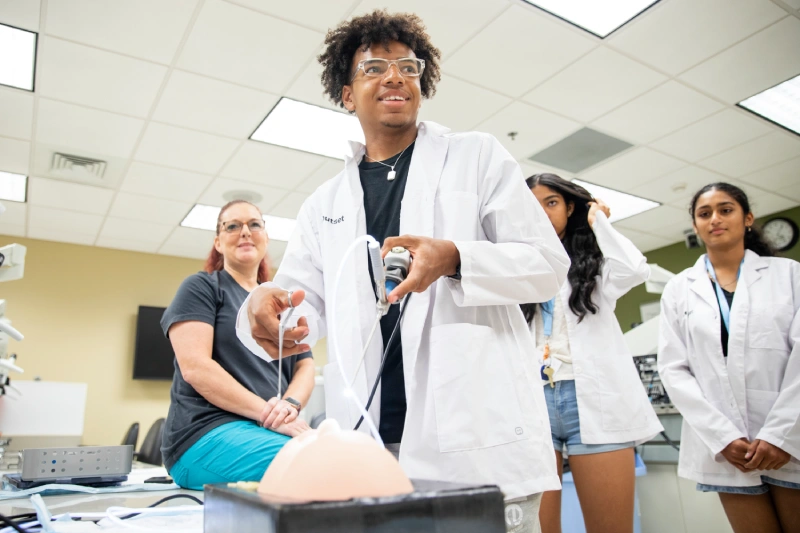
- You want hands-on skills, like suturing, taking vitals, reading imaging, or running mock patient scenarios in a simulation lab.
- You want to build friendships with motivated peers from across the country.
- You don't have access to local medical opportunities, since hospitals and labs often limit high school access.
The programs that actually change a student's path are the ones where you can see yourself in the career, not just learn facts about it. The strongest ones pair hands-on simulation and physician-led lectures with real reflection, so you don't just run a scenario, you talk it through with peers and physicians and start mapping what your own path could look like. That is the difference between a fun week and a week that shapes a decision.
How much do selectivity and prestige actually matter?
Less than you might think. A summer program rarely makes or breaks a college application, and what you do there matters more than the brand name.
We get it. Everything feels like it leads back to the college application. But to be honest, a summer program is unlikely to make or break your application. Your grades, references, test scores, and personal statement matter most. What these programs can do is clarify your academic interests, sharpen your narrative, and provide concrete stories you can articulate in interviews and essays. Colleges aren't looking for students who simply checked a competitive program off their list. They're looking for students who show genuine curiosity, passion, and growth.
Whichever program you choose, how much you get out of it comes down to how you show up. The students who take the most away are the ones who engage from day one instead of waiting until day three to get comfortable. Put your phone away, introduce yourself to instructors and peers right away, and treat every session like it is worth your full attention. Ownership of your own experience is the single biggest predictor of what you will walk away with.
What should you know about cost and financial aid?
Program costs range from free to more than $11,000, and financial aid is limited, so applying early gives you the best chance at funding.
Teen summer programs vary in cost, from free options like Baylor College of Medicine to full-cost programs like Penn Medicine. Some programs offer financial aid and scholarships. Outset, Georgetown, Wake Forest, Brown, and Johns Hopkins (among others) provide need-based awards, though availability varies by program. The key is applying early, since financial aid is often limited and runs out.
It also helps to reframe the cost. Think about how much time and money it would take if a student commits to a pre-med path for years before discovering it is not the right fit. For a student who is genuinely serious about medicine, a one-week program is one of the lowest-cost ways to test that question early, well before they are years and tens of thousands of dollars into college and medical school. We would always rather a student find the answer in an early summer than in year one of medical school.
What are the 10 best summer 2026 medicine programs for teens?
The top ten include Outset, Georgetown, Wake Forest, Stanford SMYSP, Johns Hopkins, Brown, Medical Immersion Scholars Academy, Penn Medicine, Summer Discovery, and NSLC.
| Program | Length | Cost | Grades | Aid | Selectivity |
|---|---|---|---|---|---|
| Outset Teen Medicine | 1 week | $2,950 | 9 to 12 | Yes | Competitive |
| Georgetown Medical Academy | 1 week | $3,500 to $4,000+ | Ages 15 to 18 | Yes | Open |
| Wake Forest Medicine Institute | 5 days | $3,500 | High school | Yes | Selective |
| Stanford SMYSP | 5 weeks | Free | Juniors | N/A | Highly selective |
| Johns Hopkins Foundations | 9 days | $6,140 | High school | Limited | Standard |
| Brown Hands on Medicine | 5 days | Around $3,500 | 9 to 12 | Limited | Selective |
| Medical Immersion Scholars Academy | 5 days | $1,800 | 9 to 12 | N/A | Selective |
| Penn Medicine | 4 weeks | $11,000+ | 11 to 12 | Limited | Competitive |
| Summer Discovery | 2 to 3 weeks | $3,500 to $9,000 | 9 to 11 | Yes | Open |
| NSLC Medicine and Health Care | 9 days | $4,000 to $6,500+ | 9 to 12 | Yes | Open |
1. Outset Teen Medicine Program
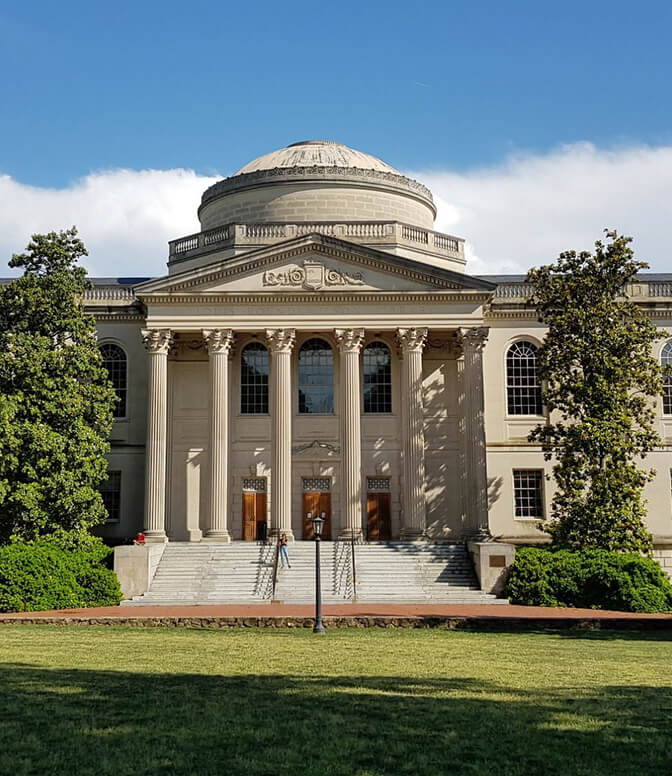
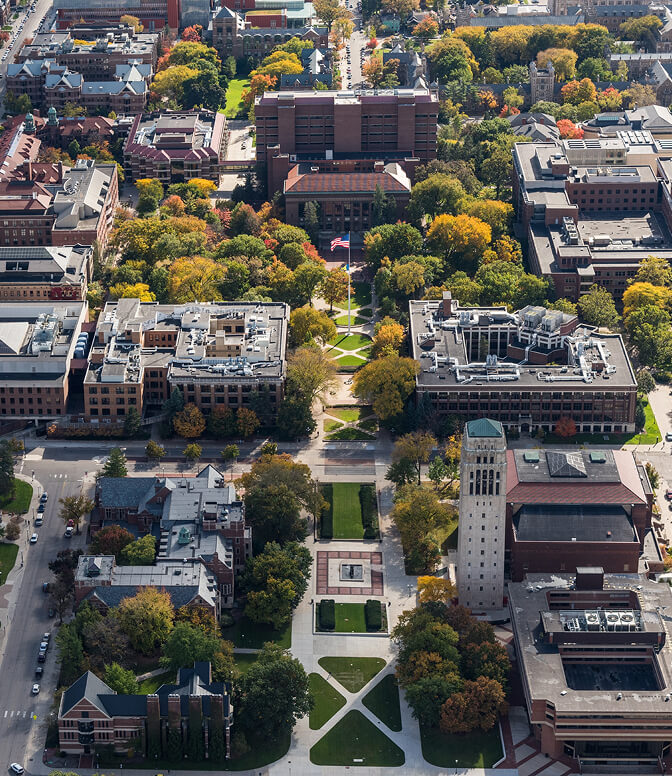
Outset is America's leading summer program option for high school students in grades 9 to 12 exploring medical careers, and it is the only program on this list exclusively focused on healthcare. For teens who want hands-on experience, the one-week Outset programs offer a chance to dive into a medical specialty like Nursing, General Surgery, Cardiology, Family Medicine, Pediatrics, Dentistry, Dermatology, Orthopedic Surgery, Anesthesiology, or Neurosurgery. Physician mentors guide you through hands-on skills specific to your specialty, like cardiac ultrasound imaging, drilling on bone models, or suturing techniques. You live on a college campus at locations including UCLA, UNC-Chapel Hill, Columbia, University of Michigan, Vanderbilt, and Arizona State University. The program costs $2,950, financial aid is available, and admission is competitive. Learn more about Outset.
2. Georgetown Medical Academy
Spend a week exploring a wide range of medical topics through lectures, interactive experiences, guest speakers, and group discussions, covering patient care, surgery, ICU medicine, and biomedical ethics. Guided by experienced professionals, you practice essential skills from assessing heart sounds to applying casts. Tuition ranges from $3,500 to over $4,000 based on your choices, need-based financial aid is available, and the program is open to students ages 15 to 18.
3. Wake Forest University Summer Immersion: Medicine Institute
If you want to explore broadly before narrowing your focus, Wake Forest's Medicine Institute is a good place to start. You explore a variety of disciplines and enjoy immersive sessions such as touring the School of Medicine, interviewing standardized patients, and exploring the cardiac cath lab. You live on the Reynolda Campus for this five-day program. Tuition is $3,500, financial aid is available, and the program is selective.
4. Stanford Medical Youth Science Program (Free)
For current high school juniors in Northern California, this program offers an intensive five-week deep dive into medicine and biomedical research, including faculty lectures, in-depth labs, an internship at Stanford Hospital, and a public health research project. SMYSP is commuter-based and tuition-free for those selected, accepting only 24 scholarship recipients each year.
5. Johns Hopkins University: Foundations of Medicine and Health
This course offers the unique opportunity to earn one academic credit as you explore surgery, internal medicine, pediatrics, emergency medicine, and biomedical science through daily modules and hands-on labs, including a fetal pig dissection. The residential nine-day option on the Homewood campus costs $6,140, and online courses are also available.
6. Brown University Pre-College Summer Program: Hands on Medicine
Step into the shoes of a medical student and see what a typical week in medical school is really like. Guided by current medical students, you explore day-to-day life at the Warren Alpert Medical School through classroom lessons, clinical skills sessions, and standardized patients. This five-day program is for grades 9 to 12 in residential and commuter formats. Tuition is around $3,500, and admission is selective.
7. Medical Immersion Scholars Academy
For students who want hands-on experience and recognized credentials, this five-day program in Oakland offers clinical simulations, phlebotomy training, and collaborative exercises using a learning-by-doing approach. Each week you earn health-focused certifications. The program is open to grades 9 to 12 and is commuter-based. Tuition is $1,800, and admission is selective through an application and interview.
8. Penn Medicine Summer Program
For a full-summer academic experience, Penn Medicine offers a four-week intensive modeled after a first-year medical school curriculum. You learn CPR and first aid, practice suturing and surgical knot-tying, and take part in labs such as gross anatomy. You live on campus at the University of Pennsylvania. Tuition is $11,000 or more, admission is somewhat competitive, and applicants must be entering grade 11 or 12.
9. Summer Discovery
A good option for broad exposure to general medicine over two to three weeks, introducing fields like Pediatrics, Family Medicine, OB/GYN, Nursing, Emergency Medicine, and Dentistry. Campuses include UC Berkeley, University of Michigan, Georgetown, and UCLA. Program fees range from $3,500 to $9,000, financial aid is available, and the program is open to grades 9 to 11 with a non-competitive application.
10. NSLC: Medicine & Health Care
For students who want to grow their leadership skills, NSLC's nine-day program pairs healthcare learning with workshops on communication, resilience, and empathy at universities like American University and Duke. Tuition ranges from $4,000 to $6,500 or more, scholarships are awarded, and the program is open to grades 9 to 12 with a non-competitive application.
Are there free or online medical summer programs?
Yes. Stanford SMYSP is free, several universities run free local programs, and a few options, including online courses from Johns Hopkins, run virtually.
Free and online programs are great for access, but in-person programs give you the hands-on, simulation-based skills that are hard to replicate on a screen. If hands-on practice is your goal, prioritize a residential or in-person option.
Final Thoughts
So there you have it: 10 excellent summer medical programs for high school students interested in medicine. As you decide which is the best fit, reflect on your personal goals, budget, and learning style. Consider whether you want a broad overview of medicine or deep immersion in a specialty, whether your focus is academic learning, hands-on skills, or mentorship, and whether a residential experience is important to you.
One caution before you compare price tags: the word hands-on can mean anything from a single lab demo to a full week of simulation-based training, and that difference matters more than the cost alone. Before you commit, ask each program two direct questions: what will my student uniquely experience this week that they could not learn online, and who is actually teaching it. Those answers tell you what you are really paying for. The best summer program will challenge you, inspire growth, and help you discover more about yourself and your potential future path in medicine.
Frequently Asked Questions
What are the best summer medical programs for high school students in 2026?
Widely recognized options include Outset, Georgetown Medical Academy, Wake Forest, Stanford SMYSP, Johns Hopkins, Brown, Penn Medicine, Summer Discovery, and NSLC. The best one depends on your budget, schedule, and whether you want a broad survey or a deep specialty dive.
Are there free medical summer programs for high school students?
Yes. Stanford SMYSP is tuition free and highly selective, and several universities run free local programs. You can also explore medicine for free through shadowing, volunteering, and HOSA.
Are there online medical programs for high school students?
Yes. Some programs, including Johns Hopkins, offer online courses, and Stanford has a virtual track. In-person programs are still better for hands-on clinical skills.
How much does Outset cost?
Outset costs $2,950, and financial aid is available for students who show financial need.
What makes Outset different from the others?
Outset is the only program on this list focused only on healthcare, and students spend the full week inside one chosen specialty with physician mentors.
Will a summer program get me into college?
Not on its own. It can strengthen your essays and interviews by giving you real stories and clarity, but grades and references matter most.
When should I apply to summer medical programs?
Early. Financial aid is limited and competitive programs fill up, so applying earlier in the cycle gives you the best odds.
What should families ask a program before enrolling?
Ask what a student will uniquely experience that they could not learn online, and who is actually teaching it. Also weigh the bigger picture: a one-week program is one of the lowest-cost ways to confirm that a pre-med path fits before a family is years and tens of thousands of dollars into college and medical school.
Ready to explore medicine?
Outset is a one-week summer Program for students in grades 9 to 12 who want hands-on medical experience with practicing physicians. Start your application or explore Programs and campuses.
Related Outset Reading
- Medical Programs for High School Students: Key Factors to Consider
- How to Choose a Medical Specialty in High School
- How 200 High Schoolers Got a Head Start on Pre-Med
Sources
- HOSA Future Health Professionals. https://hosa.org/
- Stanford Medical Youth Science Program. https://med.stanford.edu/odme/high-school-students/smysp.html
- AAMC, Explore Medicine for High School Students. https://students-residents.aamc.org/resources-k-12-community/explore-medicine-high-school-students



%202.jpg)